Want to be in the loop?
subscribe to
our notification
Business News
VIETNAM BANKS RACE TO KEEP DOLLAR BORROWERS AS TIGHTENED LENDING CONDITIONS NEAR
“Those businesses in need of foreign currencies for goods and service payments and fuel imports are still allowed to borrow the money,” Dung toldTuoi Tre(Youth) newspaper.
Even so, many credit institutions say the tightened conditions would drive a lot of their customers away, prompting them to find new ways to keep borrowers.
Some banks have allowed their customers to ‘register’ loans in foreign currencies they want to borrow by the end of this month to dodge the new policy.
This means banks have guaranteed to lend foreign currencies to businesses before the Circular No.24 takes effect, so they will not violate the rule, according to analysts.
“Another solution is to offer loans in VND at very low interest rates, even at a loss,” the director of a bank said on condition of anonymity.
Banks try to keep borrowers in the hope that these customers will use their other services to make up for the loss caused by the cheap interest rates, according to the banker.
De-dollarization plan
Credit institutions in Vietnam have also struggled to attract deposits in foreign currencies, especially USD, after the SBV set the interest rateto zeroin December 2015.
Banks have had to offer promotions and gifts to lure dollar deposits from customers, otherwise “they withdraw their deposits in both USD and VND,” a director of one bank said.
The tightened rule on lending in foreign currencies, as well as the scrapping of the ceiling on individual dollar deposits, is amongst measures consistently taken by the SBV in the last few years to de-dollarize the economy.
Businesses used to be able to borrow loans in foreign currencies and exchange the credits for the dong to buy machinery or materials to serve their production, the SBV monetary policy head, said.
“These borrowers would export their products and use foreign currencies to repay their loans,” he explained.
It is seen as a supporting move by the SBV to businesses, as it was much cheaper to borrow in foreign currencies than in the dong, according to Nguyen Hoang Minh, deputy director of the Ho Chi Minh City branch of the SBV.
“There were times when the interest rates for loans in USD were only a third of those for lending in dong,” he elaborated.
However, as the economy has improved and Vietnam’s credit rating becomes healthier, the SBV decided that it was time to tighten lending in foreign currencies, Minh said.
“The interest rates for loans in VND have significantly reduced,” he said.
“As part of its de-dollarization roadmap, the SBV wants to keep people from hoarding U.S. dollars by imposing a zero interest rate for dollar deposits and tightening up dollar loans.
“Businesses will surely be affected by the tightened condition, but we have to accept it as we must move with the trend.”
Source: The Business Times
Related News
VIETNAM ECONOMY INVESTMENT
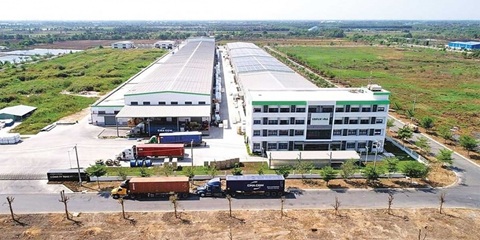
FOREIGN INVESTORS SEEKING A SYNCHRONISED MANUFACTURING ECOSYSTEM
Instead of focusing only on land costs and incentives as usual, foreign investors are seeking a synchronised manufacturing ecosystem, from stable power supply and logistics to shared infrastructure and the convenience of completing residence procedures for experts to serve their long-term investment in the country.
INFRASTRUCTURE / CONSTRUCTION / LOGISTIC / PORT
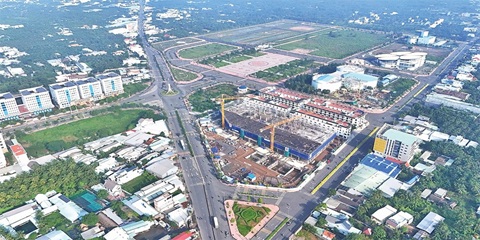
DONG THAP PROVINCE STEPS UP INDUSTRIAL EXPANSION AND INFRASTRUCTURE CONNECTIVITY
Accelerating public investment, strengthening inter-regional connectivity, and expanding industrial land are helping Dong Thap efficiently bolster competitiveness and drive economic growth. Following the 2025 merger of the former Dong Thap and Tien Giang provinces, the expanded Dong Thap province in the Mekong Delta faces mounting pressure to accelerate infrastructure development and strengthen connectivity among local economic zones, urban areas, industrial parks (IPs), and production centres.
PROPERTY / INDUSTRIAL ZONE
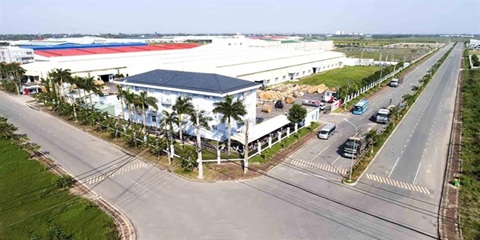
HCM CITY ATTRACTS US$5.7 BILLION INTO EXPORT PROCESSING AND INDUSTRIAL ZONES
HCM City attracted US$5.7 billion in domestic and foreign investment into its export processing and industrial zones during the first nine months of 2026. The figure exceeded the city's full-year target by 31 per cent, highlighting strong momentum in high-quality industrial investment under Resolution No.10-NQ/TW. Total investment reached 131 per cent of the 2026 target of $4.25 billion and represented a 29 per cent increase compared with the same period in 2025, according to the city's Export Processing and Industrial Zones Authority (HEPZA).

BANKING / FINANCE / INSURANCE / TAX
REMITTANCES TO HCM CITY RISE NEARLY 40% IN Q3
Remittances to HCM City reached more than US$2.83 billion in the third quarter of this year, up 39.5 per cent from the previous quarter and 3.6 per cent year-on-year. This was the first quarter showing positive annual growth this year, helping narrow the decline in remittance inflows over the first nine months. According to the State Bank of Vietnam (SBV)’s Regional Branch 2, remittances transferred to HCM City through credit institutions and economic organisations totalled $2.835 billion in Q3, an increase of more than $802 million from the previous quarter.
VIETNAM ECONOMY INVESTMENT
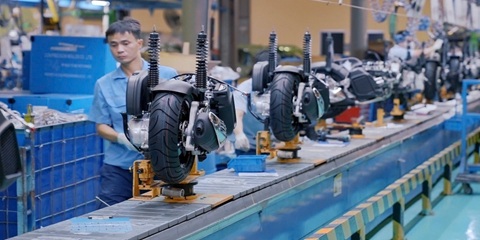
LOCALITIES REPORT BREAKTHROUGH RESULTS IN FDI IN FIRST NINE MONTHS
In Ho Chi Minh City, total registered capital reached $17.2 billion in the first nine months, up 4.2 times from the same period last year. The figure included more than $9.35 billion in newly registered capital and over $4.9 billion in additional capital for existing projects. Foreign investors also registered more than $2.9 billion through capital contributions and share purchases.

TECHNOLOGY
TECH SECTOR GROWTH OPENS UP OPPORTUNITIES FOR VIỆT NAM TO GO GLOBAL
The growth of the electronics, semiconductor and high-tech sectors worldwide is opening up a variety of opportunities for Vietnamese enterprises to integrate more deeply into the global supply chain. However, to become suppliers for these corporations, domestic enterprises must meet rigorous standards regarding quality, technology, productivity and order fulfilment capabilities.
Events Sponsors






















